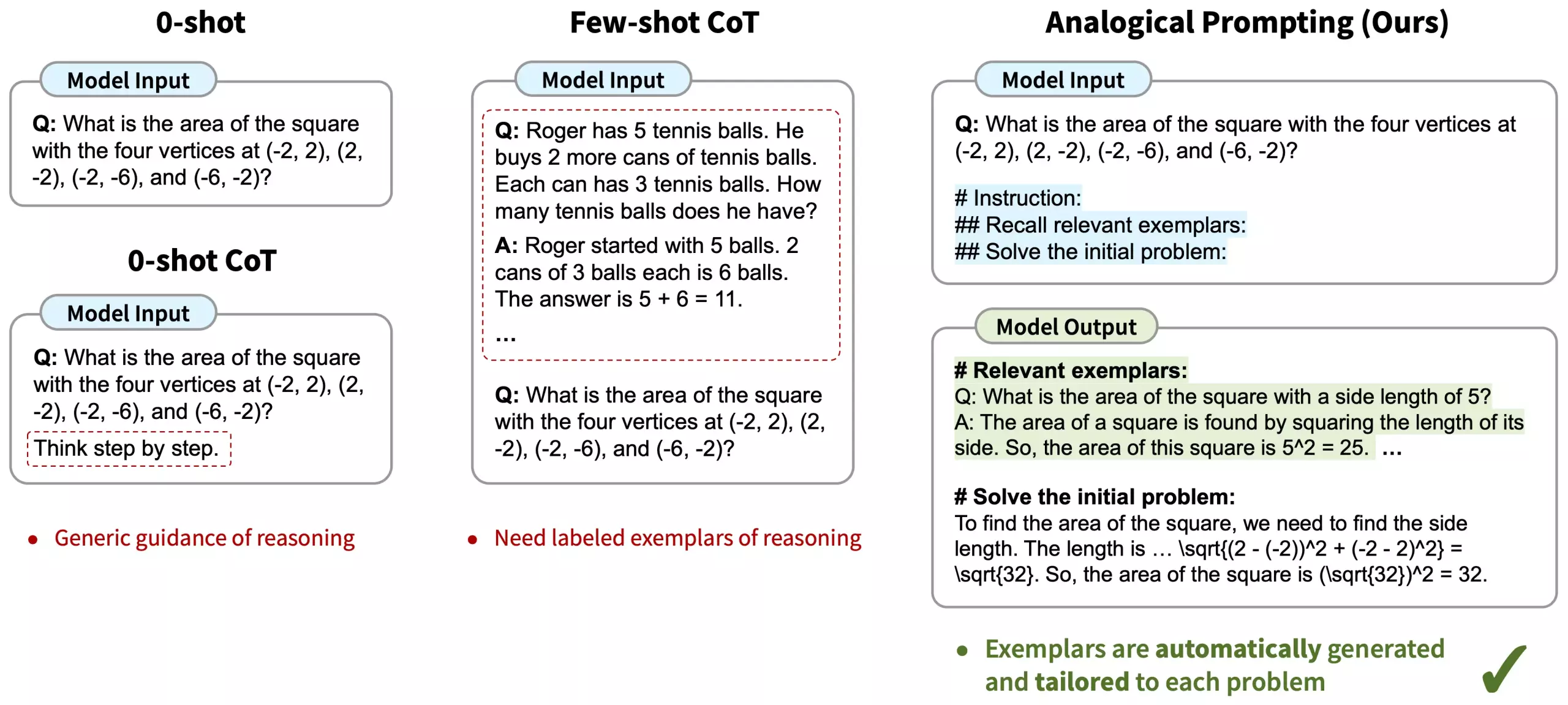
Your goal is to write Python3 code to solve competitive programming problems. Given a problem, explain the core concepts in it and provide other relevant problems. Then solve the original problem.
# Problem:
You are given a sequence a_1, a_2, \ldots, a_n. Each element of a is 1 or 2. Find out if an integer k exists so that the following conditions are met.
1 \leq k \leq n-1, and a_1 \cdot a_2 \cdot \ldots \cdot a_k = a_{k+1} \cdot a_{k+2} \cdot \ldots \cdot a_n, where \cdot denotes a product.
If there exist multiple k that satisfy the given condition, print the smallest.
Input
Each test contains multiple test cases. The first line contains the number of test cases t (1 \le t \le 100). Description of the test cases follows.
The first line of each test case contains one integer n (2 \leq n \leq 1000).
The second line of each test case contains n integers a_1, a_2, \ldots, a_n (1 \leq a_i \leq 2).
Output
For each test case, if there is no such k, print -1.
Otherwise, print the smallest possible k.
# Instruction:
## Algorithms:
Identify the core concepts or algorithms used to solve the problem.
## Tutorial:
Write a useful tutorial about these algorithms.
## Example Problems:
Provide three examples of relevant competitive programming problems that involve these algorithms. For each problem, describe the problem, explain the solution in detail, and then write the correct Python3 code.
## Python3 code to solve the original problem:
Include the following points in your response:
- Explanation of the solution:
- Python3 code to solve the problem:
## Algorithms:
The core algorithm for solving this problem is the prefix product algorithm.
## Tutorial:
The prefix product algorithm is used to calculate the product of all the elements in a prefix of an array. It is a useful algorithm for solving problems that involve calculating the product of all the elements in a subarray.
The algorithm works by initializing a variable "prefix" to 1, and then iterating through the array from left to right. At each iteration, the current element is multiplied with the prefix, and the result is stored in the prefix variable. This way, the prefix variable keeps track of the product of all the elements in the prefix of the array.
Here is the pseudocode for the prefix product algorithm:
The time complexity of this algorithm is O(n), where n is the size of the input array.
## Example Problems:
1. Problem: Given an array of integers, find the product of all the elements in each subarray of size k.
Solution: We can use the prefix product algorithm to solve this problem. We initialize a prefix variable to 1, and then iterate through the array from left to right. At each iteration, we multiply the current element with the prefix, and store the result in the prefix variable. If the index i is greater than or equal to k-1, we divide the prefix by the element arr[i-k+1], which represents the first element of the subarray of size k starting at index i-k+1. The result is the product of all the elements in the subarray of size k starting at index i-k+1. We can store these results in a new array and return it as the output.
2. Problem: Given an array of integers, find the longest subarray with a product less than or equal to a given target.
Solution: We can use the prefix product algorithm to solve this problem. We initialize a prefix variable to 1, and then iterate through the array from left to right. At each iteration, we multiply the current element with the prefix, and store the result in the prefix variable. If the prefix becomes greater than the target, we divide the prefix by the first element of the subarray, and move the start pointer of the subarray one step forward. We update the maximum length of the subarray if necessary.
3. Problem: Given an array of integers, find the smallest k such that the product of all the elements in the prefix of the array is equal to the product of all the elements in the suffix of the array.
Solution: We can use the prefix product algorithm to solve this problem. We initialize a prefix variable to 1, and then iterate through the array from left to right. At each iteration, we multiply the current element with the prefix, and store the result in the prefix variable. We also initialize a suffix variable to 1, and then iterate through the array from right to left. At each iteration, we multiply the current element with the suffix, and store the result in the suffix variable. If the prefix is equal to the suffix, we return the current index as the smallest k. If no such index is found, we return -1.
Below is a baseline output generated by GPT3.5-turbo-16k using vanilla 0-shot prompt. This output does not recall any relevant exemplars and fails to employ the prefix product algorithm, resulting in an incorrect solution.
Your task is to tackle reasoning problems. When presented with a problem, recall relevant problems as examples. Afterward, proceed to solve the initial problem.
# Initial Problem:
"Is Siri a stepsister of Mary? Is Susan related to Kate? In large families, it is sometimes difficult to keep track of all one’s relatives. The following argument seeks to clarify some such relations: To start with, everyone who is a schoolmate of Mildred is a daughter of Jeanette, too. Now, being a daughter of Jeanette is sufficient for not being a cousin of Cristi. Therefore, no schoolmate of Mildred is a cousin of Cristi." Is the argument, given the explicitly stated premises, deductively valid or invalid? Options: - valid - invalid
# Instructions:
Make sure to include all of the following points:
## Relevant Problems:
Recall three examples of problems that are relevant to the initial problem. Note that your problems must be distinct from each other and from the initial problem. For each problem:
- After "Q: ", describe the problem
- After "A: ", explain the solution and enclose the ultimate answer in \boxed{}.
## Solve the Initial Problem:
Say "Let’s solve the following reasoning problem." Then formulate your response in the following format:
Q: Copy and paste the initial problem here.
A: Explain the solution and enclose the ultimate answer in \boxed{} here.
Relevant Problems:
Q: In a certain town, all doctors are required to have a medical degree. John is a doctor. Therefore, John must have a medical degree. Is this argument valid or invalid?
A: This argument is valid because it follows the logical form of a categorical syllogism, where the first premise establishes a universal statement and the second premise applies that statement to a specific case. Therefore, the conclusion can be logically deduced. \boxed{valid}
Q: All cats have fur. Fluffy is a cat. Therefore, Fluffy has fur. Is this argument valid or invalid?
A: This argument is valid because it follows the logical form of a categorical syllogism, where the first premise establishes a universal statement and the second premise applies that statement to a specific case. Therefore, the conclusion can be logically deduced. \boxed{valid}
Q: If it is raining, then the ground is wet. The ground is wet. Therefore, it must be raining. Is this argument valid or invalid?
A: This argument is invalid because it commits the fallacy of affirming the consequent. Just because the ground is wet does not necessarily mean that it is raining, as there could be other factors that caused the ground to become wet. \boxed{invalid}
Solve the Initial Problem:
Let’s solve the following reasoning problem:
Q: "Is Siri a stepsister of Mary? Is Susan related to Kate? In large families, it is sometimes difficult to keep track of all one’s relatives. The following argument seeks to clarify some such relations: To start with, everyone who is a schoolmate of Mildred is a daughter of Jeanette, too. Now, being a daughter of Jeanette is sufficient for not being a cousin of Cristi. Therefore, no schoolmate of Mildred is a cousin of Cristi." Is the argument, given the explicitly stated premises, deductively valid or invalid?
A: The argument is deductively valid. The premises state that everyone who is a schoolmate of Mildred is a daughter of Jeanette, and being a daughter of Jeanette is sufficient for not being a cousin of Cristi. Therefore, it logically follows that no schoolmate of Mildred is a cousin of Cristi. \boxed{valid}
The argument is deductively invalid.
To determine the validity of the argument, we need to analyze the logical structure and see if the conclusion necessarily follows from the premises.
Let’s break down the argument:
1. Everyone who is a schoolmate of Mildred is a daughter of Jeanette.
2. Being a daughter of Jeanette is sufficient for not being a cousin of Cristi.
Conclusion: No schoolmate of Mildred is a cousin of Cristi.
The first premise establishes a relationship between being a schoolmate of Mildred and being a daughter of Jeanette. However, it does not provide any information about the relationship between being a schoolmate of Mildred and being a cousin of Cristi.
The second premise establishes a relationship between being a daughter of Jeanette and not being a cousin of Cristi. However, it does not provide any information about the relationship between being a schoolmate of Mildred and being a cousin of Cristi.
Therefore, the conclusion that no schoolmate of Mildred is a cousin of Cristi cannot be logically derived from the given premises. The argument is deductively invalid.
\boxed{invalid}
Michihiro Yasunaga,2,1 Xinyun Chen,1 Yujia Li,1 Panupong Pasupat,1 Jure Leskovec,2
Percy Liang,2 Ed H. Chi,1 Denny Zhou1
1 Google DeepMind 2 Stanford University
我们的研究报告中采用了与早前的代码生成研究相一致的指标,即 Acc@1 和 Acc@10 (Li et al., 2022; Chen et al., 2023)。Acc@k 是用来衡量在 k 次模型输出样本中,至少有一次输出是正确的。我们从大语言模型中抽取 10 次输出样本来针对每个问题进行测试,并在抽样过程中设定温度为 0.7。
其他推理任务
我们还评估了 BIG-Bench (Srivastava et al., 2022; Suzgun et al., 2022) 中的多个推理任务,包括单词排序、五个对象的逻辑推理、时间序列推理、彩色对象推理以及形式谬误推理。这些任务形式各异,并可能没有相应的专用训练数据。因此,这些任务非常适合用我们的方法来生成定制的示例进行测试。对于每个任务,我们从大语言模型(LLMs)中得到输出,并且在输出温度设为 0 的条件下,记录模型的准确性。
Our prompt (self-generate exemplars and knowledge):
Output by GPT3.5-turbo-16k:
D.4 BIG-Bench: formal fallacies
Our prompt (self-generate exemplars):
Output by GPT3.5-turbo:
Below is a baseline output generated by GPT3.5-turbo using 0-shot CoT prompt. This output does not recall any relevant exemplars and adopts an incorrect approach to address the deductive reasoning problem.